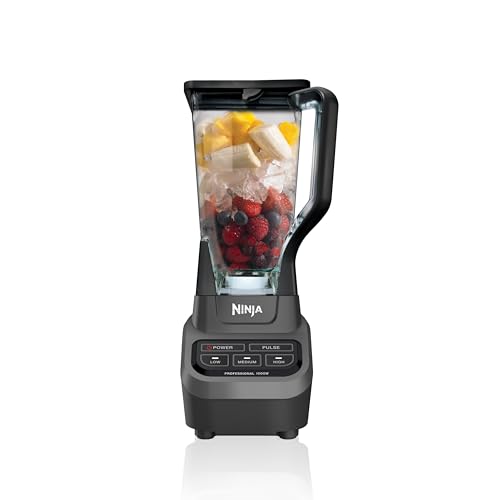
The Ninja Professional BL610 is a large, plain blender with a 72 oz pitcher, a six-blade stack and four manual buttons. It does not have presets, a tamper or a touchscreen. It is one of the older designs in the Ninja line, and that is part of its appeal: the controls are simple and easy to understand. This profile covers what the owner’s manual and independent repair documentation say about it. For the larger lineup, see our guide to the best blenders of 2026.
We write from published sources, not our own measurements. Ninja’s own product page for this model could not be reached, so our facts come from a copy of Ninja’s owner’s manual hosted on ManualsLib and from iFixit’s device page. We name the source each time, and we leave out anything we could not confirm.
The Short Version
According to iFixit, the BL610 has a 72 oz plastic pitcher, a removable six-blade stack and a lid with a pour spout. The base has a power button, a pulse button and low, medium and high speeds. The base is printed with Professional 1000W, which is where the model’s wattage comes from. It is only sold in black.
There are no programs. Every blend is manual, so the user decides the speed and the time. That suits people who like to control texture, but it is a drawback if you want a smoothie button.
Key Specs According to the Sources
- Motor label: Professional 1000W, printed on the front of the base (iFixit).
- Pitcher: 72 oz plastic pitcher (iFixit).
- Blades: Removable six-blade stack (iFixit).
- Lid: Lock-in lid with a pour spout, so you can pour without removing the lid (iFixit).
- Controls: Power, pulse, low, medium and high (iFixit and the manual).
- Safety interlock: The blade stack will not rotate unless the pitcher and lid are secured (iFixit). In the manual, the power button flashes if the pitcher and lid are not installed correctly, and a solid light means the unit is ready.
- Overheating: The manual describes a thermal cutout that shuts off the motor. To reset, unplug the unit and let it cool for about 15 minutes.
- Color: Black only (iFixit).
- First released: 2014 (iFixit).
We could not confirm a maximum liquid line in ounces, a dishwasher rule or the warranty term from a page we opened, so we do not state them. The manual’s table of contents lists a warranty section, so read it before you buy. Check the Amazon listing for the same details.
The manual’s blending chart is the clearest explanation of the buttons.
- Low (processing and mixing): Thin batters, sauces, marinades, eggs, soft cooked foods and chopped vegetables for dips.
- Medium (blending and crushing): Grating hard cheese, blending soups and spreads, grinding nuts and crushing ice for drinks.
- High (pureeing and liquefying): Smoothies, frozen drinks, thick mixtures and whole fruits and vegetables.
- Pulse (controlled processing): Short bursts for precise chopping.
This is a useful guide even if you own another blender. It makes the point that a high speed is not always the right speed: ice goes on medium, a pureed soup on high. For beginners, that chart is easier to follow than a list of unnamed numbers.
Because there is no timer or program, you stand at the machine. That is fine for a thirty-second smoothie. It gets tiresome for a long batch of nut butter or a thick frozen mixture.
Pitcher and Blade Stack
The 72 oz pitcher is big. The manual says to keep ingredients below the highest measurement line on the side, which is the real limit, not the headline capacity. Fill thin liquids lower than thick ones, and leave headroom for frozen ingredients.
The six-blade stack is a removable assembly. A stacked design has several blade layers on one tall shaft, intended to work through ice and frozen fruit in a wide pitcher. iFixit confirms that the stack is removable, which matters for cleaning and for replacing a worn part. The page does not give performance figures.
Without a tamper, thick mixtures can stall. The manual offers a few tips for ice: use ice straight from the freezer, because ice that has started to melt can fail to break down, and make sure the pitcher is completely dry first. If results are uneven, it advises using smaller amounts and cutting ingredients to similar sizes. If food is processed too finely, use pulse for more control.
Safety and Hot Liquids
The manual says not to blend hot liquids. That rules out the habit of pouring a hot soup straight into the pitcher. If you want to puree soup, let it cool first, work in small batches and keep the lid on firmly.
The interlock is a useful safety feature. If the pitcher or lid is not seated properly, the power button flashes and the motor will not run. The manual also tells you not to operate the blender without the lid. Never put your hands or utensils into the pitcher while it is on the base.
Adding Ingredients Mid-Blend
The manual says you can open the pouring spout cap and add ingredients through the opening while the blender is running. That is handy for adding liquid to a thick mixture or dropping in ice. Keep your hands clear of the opening, and add ingredients slowly.
Cleaning
The manual has a care and maintenance section, but the pages we opened did not state which parts are dishwasher safe. Check the manual that comes in the box before you put any part in the dishwasher. In the meantime, a simple method works for most pitchers: rinse right away, add warm water and a drop of dish soap, and run a short pulse. Handle the blade stack carefully. Do not submerge the motor base.
Pros and Cons
Pros
- 72 oz pitcher with a removable six-blade stack
- Low, medium, high and pulse, with a clear blending chart in the manual
- Interlock keeps the motor off unless the pitcher and lid are seated
- Pour spout lid with a cap for adding ingredients
- Simple controls that are easy to learn
Cons
- No presets and no tamper
- Not for hot liquids, per the manual
- Black only, and an older design from 2014
- We could not verify the warranty or dishwasher rules from an opened page
How It Compares
The closest sibling is the Ninja Professional Plus BN701, which adds Auto-iQ presets and a higher power rating on its listing. If you want presets, the BN701 is the next step up. If you want a simple pitcher and are happy to blend by hand, the BL610 covers the basics.
Against a personal blender such as the nutribullet Pro 900, the BL610 is a different kind of machine. It is for batches, sauces and ice. A personal blender is for a single drink.
Who Should Buy It
The BL610 suits a household that wants a large pitcher with plain, manual controls and does not need programs. It works for ice, smoothies and sauces, and for anyone who likes to decide the speed. Skip it if you want presets, a tamper for thick bowls or a blender that handles hot soup.
What to Check Before You Buy
- Model number: Look for Professional 1000W on the front of the base, per iFixit.
- Cabinet clearance: A 72 oz pitcher is tall, so measure.
- Warranty and dishwasher rules: Read the manual and the listing.
- Controls: There are no presets, so every blend is manual.
To check the current listing and see the price, go to Ninja BL610 on Amazon.
Sources